

Indian Sandstone vs Porcelain Patios: Which One Should You Pick?
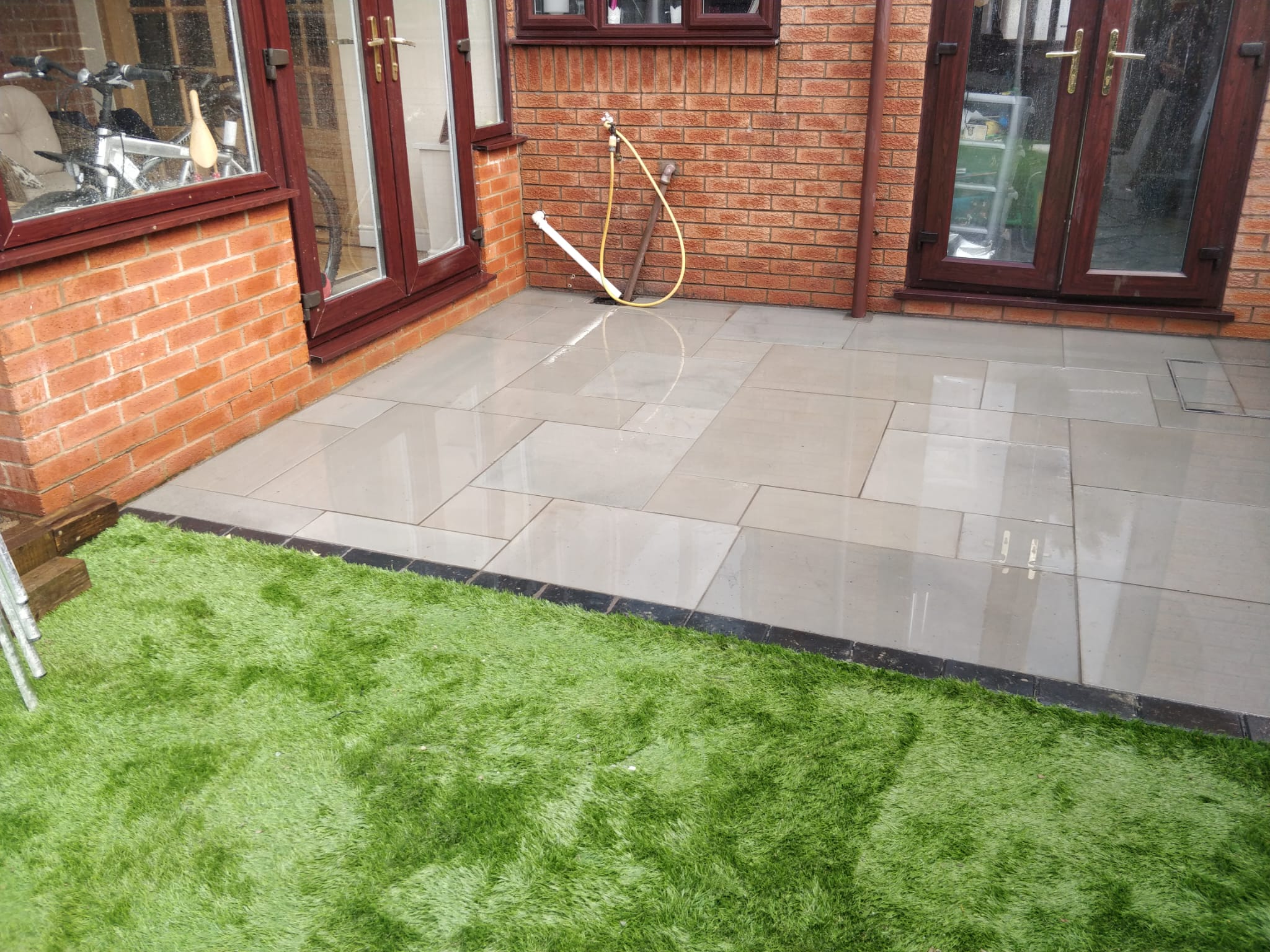
So you’re standing in the garden with a tape measure in one hand and a Pinterest board in the other, trying to decide between Indian sandstone and porcelain for your new patio. It’s one of the most-asked questions we get at Wolsten, and there’s no single right answer — the best material for you depends as much on how you’ll live with the patio as on what it looks like on day one.
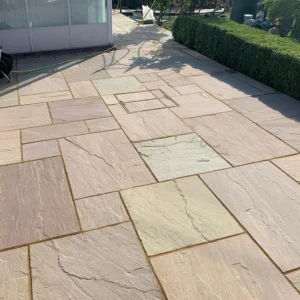
This guide walks through the practical differences — look, cost, durability and maintenance — so you can make the call with confidence.
How they look (and how they age)
Indian sandstone has natural variation built in. Every slab is slightly different in tone, with browns, greys, golds and pinks running through the same pack. It softens over time, gathers a little lichen if you let it, and tends to suit period properties and traditional gardens — anything where a slightly weathered, lived-in finish reads as charming rather than tired.
Porcelain is the opposite. Modern manufacturing means every slab is dimensionally identical and the colour is consistent from pack to pack. The look is sharper and more architectural, and the surface holds its original appearance for years. It’s the default choice for contemporary extensions, modern new-builds, and any garden where you want the paving to look as crisp in year ten as it does on the day it goes down.
2026 cost ranges in the North West
Material prices vary depending on supplier and finish, but for a typical North West patio supplied and laid by a reputable contractor in 2026, you should expect:
- Indian sandstone: roughly £85–£120 per m², all in.
- Porcelain: roughly £130–£180 per m², all in.
The gap is real but not always as wide as the headline numbers suggest. Sandstone is cheaper to buy but heavier and slightly more labour-intensive to lay because of the irregular thickness. Porcelain costs more per slab but goes down faster and demands a more precise sub-base, which itself adds to the labour bill. By the time the job is done, the difference is usually £30–£50 per m² rather than double.
Durability and maintenance
This is where the two really pull apart. Indian sandstone is porous, so it picks up stains (red wine, BBQ grease, leaf tannins) and benefits from sealing every two to three years to keep it looking sharp. In the wettest months it can go a little green where shade and water linger — a stiff brush and patio cleaner sorts that out in a weekend.
Porcelain is effectively non-porous. It won’t stain, doesn’t need sealing, and is frost-proof to a degree that sandstone simply isn’t — water can’t get into the slab, so freeze-thaw cycles do nothing. The trade-off is that any imperfection in the sub-base shows up sooner: a slab that rocks because the bedding mortar wasn’t right will rock for ever, because porcelain doesn’t have the give that sandstone does.
Three things to weigh before you decide
- How the patio sits with the house. Period brick, render and timber tend to look best alongside the warm tones and texture of sandstone. Crisp modern extensions, large glass doors and rendered facades usually look more cohesive against the cleaner lines of porcelain.
- Your tolerance for upkeep. If a weekend pressure-wash twice a year and a re-seal every couple of years sounds like a chore, porcelain is forgiving. If you don’t mind the maintenance — or you actively like the patina sandstone develops — the cheaper material is probably the right one.
- Pristine forever, or mellowed over time. Be honest with yourself. Some homeowners love that a patio looks pristine for fifteen years. Others find that aesthetic a bit cold and prefer something that softens with the garden around it. Neither is wrong — but the two materials behave very differently here.
Get the sub-base right, whichever you choose
Both materials live or die by what’s underneath. A properly prepared sub-base — typically 100–150mm of compacted Type 1 MOT with a 30–40mm full mortar bed on top — is non-negotiable. Skimping here is the single most common cause of patio failure, regardless of whether the slabs cost £30 or £80. If you’d like a sense of how we approach the structural side of a job, our landscaping service page and previous projects show finished patios in both materials laid over a properly built base.
So which should you pick?
There’s no universal answer, but there is a useful filter: the right choice depends as much on your maintenance appetite as it does on the paving itself. If you want something with character that you don’t mind looking after, Indian sandstone is hard to beat for the price. If you want something that goes down crisp and stays crisp for a decade with almost no input, porcelain is worth the extra. Either way, getting the sub-base and drainage right matters more than the slab on top.
If you’re weighing up a patio project in Greater Manchester or the wider North West, we’d be happy to walk the garden with you and talk through the trade-offs.