

Full Property Refurbishment Cost: A Room-by-Room Breakdown for 2026
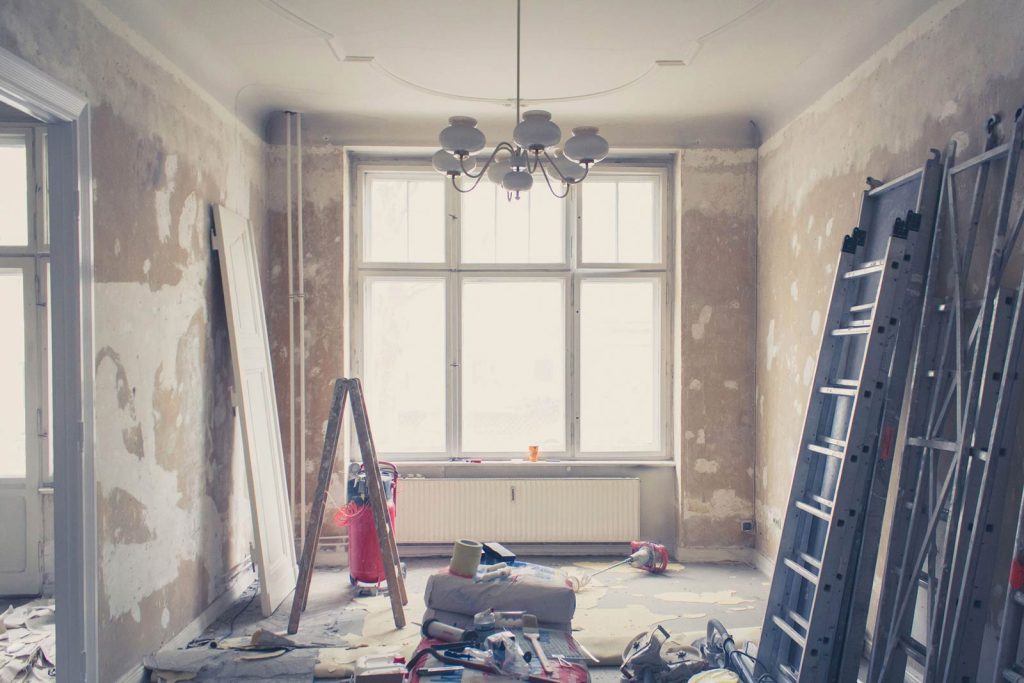
“What does a refurbishment cost?” is one of the first questions every homeowner and landlord asks us, and the honest answer is that it depends on two things: how much you strip out, and the spec you choose. Get clear on those two levers and the numbers stop feeling like a lottery. This guide walks through 2026 North West costs room by room, explains the jargon as we go, and gives you two worked examples so you can sanity-check any quote you’re handed.
The two things that decide your property refurbishment cost
Before any figures, understand the two cost levers. The first is scope: are you doing a cosmetic refresh (new paint, flooring and a few fittings on the existing layout), or a full strip-and-refit (everything out, back to the shell, then rebuilt)? The second is spec — short for specification, meaning the quality level of the materials and finishes you pick. A budget kitchen and a bespoke one fit in the same space but cost wildly different amounts.
The quickest way to ballpark a whole-house job is the cost-per-square-metre rule of thumb. That simply means total project cost divided by the internal floor area of the house. As a 2026 North West guide: a light cosmetic refresh runs roughly £400–700/m², a mid refurb (new kitchen and bathroom, partial rewire, replaster) roughly £700–1,200/m², and a full strip-back-to-brick with rewire, replumb and new heating roughly £1,200–1,800/m² and up. London and the South East typically run 20–45% higher.
Put that to work: a 90m² three-bed semi at mid spec lands somewhere around £63k–108k. That’s a wide band on purpose — the only truly accurate number comes from a surveyed, itemised quote on your actual property.
A plain-English glossary (woven in as we go)
You’ll meet a lot of trade shorthand. A strip-out or soft-strip means removing the old fittings back to the shell. Making good is repairing the surfaces that other work disturbs — the classic hidden cost. First fix is everything hidden in the walls and floors before plastering: cables, pipes, structural work. Second fix is everything you see and touch after plastering: sockets, switches, taps, doors and skirting. Snagging is the end-of-job punch-list of small defects the builder comes back to fix.
Two more worth knowing: a PC sum or provisional sum is a placeholder figure in a quote for something you haven’t chosen yet — for example “tiles: £40/m² PC sum”. Pick pricier tiles and that line rises. And supply and fit means the price includes the materials, whereas labour only means you’re buying just the fitting.
Room-by-room refurbishment costs in 2026
Kitchen — £6,000–18,000. At the low end you get new doors, a worktop and appliances on the existing layout. At the high end it’s a full rip-out with moved services, bespoke units and stone worktops. The items that surprise people: moving the sink or gas run (it pulls in a plumber and sometimes a gas engineer), and the cost of integrated appliances over freestanding ones.
Bathroom — £4,000–9,000. Low is swapping the suite on the same layout; high is a full retile, repositioned soil pipe, walk-in shower and underfloor heating. Watch two line items: tanking (the waterproofing layer behind the tiles, non-negotiable in a wet area) and the tiling labour, which is often more than the tiles themselves.
Living room and bedrooms — £1,500–4,000 per room, depending on whether it’s decorate-only or replaster plus new flooring and electrics. The difference in plastering matters here: a skim is a thin coat of fresh plaster over sound existing walls, while a full hack-off-and-reboard strips back to brick and starts again — much more disruptive and more expensive.
Hallway and stairs — £1,500–3,500. Routinely underestimated. You’re working at height on the stairwell, dealing with spindles and balustrade, and decorators face a lot of fiddly cutting-in around the strings and treads.
Whole-house electrical rewire — £4,000–7,000 for a three-bed in the North West. That includes a new consumer unit (the modern name for the fuseboard) and a Part P certificate. Crucially, it does not include the replastering and redecoration needed to make good the chased walls afterwards — the hidden cost that catches people out every time.
Plastering throughout — £3,000–6,000. Skim-over-existing sits at the lower end; hack-off-and-reboard at the higher, because you’re paying to remove the old plaster, board out and then skim.
Decorating throughout — £3,000–5,000. The prep (filling, sanding, caulking and priming) is most of the labour and cost — not the painting itself. A cheap quote usually means the prep is being skimped.
Flooring — £25–80/m² supplied and fitted. Budget laminate or vinyl is roughly £25–40/m²; LVT (luxury vinyl tile — a hard-wearing click or glue-down vinyl plank that mimics wood or stone) roughly £45–70/m²; engineered wood or herringbone £80/m² and up; ceramic or porcelain tiling £45–110/m² depending on tile size and pattern.
Exterior and external making good — render patching, fascias and soffits, a coat of masonry paint, paths and the drive. Routinely forgotten in the budget, but part of any proper refurb.
Two worked examples (illustrative, not quotes)
1) Buy-to-let two-bed terrace, light-to-mid “tenant-ready” refurb. New kitchen £7k, bathroom £5k, partial rewire plus new consumer unit £3k, replaster the key rooms £3k, full redecoration £3.5k, new flooring throughout (~60m²) £2.5k, and sundries — skip and scaffold — £2k. That’s roughly £26k all-in, over about 4–6 weeks.
2) Owner-occupier three-bed semi, full strip-and-refit. Kitchen £14k, two bathrooms £12k, full rewire £6k, replumb plus new boiler £5k, replaster throughout £5k, decoration £5k, flooring (~95m²) £6k, new internal doors and joinery £3k, plus a 12% contingency. That comes to roughly £62k and up, over about 10–16 weeks.
Refurbish, or rebuild and move?
A rough framing: sub-£100k usually keeps you in refurbishment territory, while £100k-plus starts to overlap with extending, rebuilding or moving. Here’s a simpler test — if you’re stripping back to brick and reconfiguring the layout, you’re in “major works” territory, where a fixed-price contract and one accountable contractor matter most. That’s where budgets either hold or quietly spiral.
How long does a refurbishment take?
Realistic 2026 timelines: a small cosmetic refurb takes 3–6 weeks; a kitchen-and-bathrooms refresh 6–10 weeks; a full strip-and-refit 10–16 weeks. One thing people miss — 2–6 weeks of prep and ordering happens before work starts on long-lead items like kitchens and stone worktops. Your “start date” and your “order date” are not the same thing, so factor that in when you plan around it.
Three practical tips before you commit
1. Always get an itemised quote, not a single lump sum. An itemised quote shows you the PC and provisional sums and spells out exactly what’s excluded. A one-line “£60,000” tells you nothing and protects no one.
2. Hold a 10–15% contingency for what’s behind the walls. Older North West housing stock — Victorian terraces, interwar semis — hides damp, perished wiring and rotten joists you only find once you open up. The contingency is what stops a surprise becoming a crisis.
3. Respect the sequence. First fix, then plaster, then second fix. Rushing the finishes before the structure and services are signed off almost always costs more in rework than doing it in order ever would.
A note on 2026 costs
Two forces are shaping prices this year. Skilled-labour rates are around 12–15% above 2024, with the trades shortage the main upward pressure. Material prices, on the other hand, have largely stabilised after the 2022–23 spikes. The practical takeaway: treat any quote older than about 60–90 days as unreliable, because labour pricing in particular keeps moving.
Get a fixed price you can plan around
Every figure above is a 2026 North West range to help you budget — the only genuinely accurate number is a surveyed, itemised quote on your specific property. If you’d like to see the standard of finish we deliver across kitchens, bathrooms and whole-house projects, browse our previous projects, then take a look at exactly what’s covered on our property refurbishment service page. When you’re ready, we’ll come out for a free survey and send an itemised written quote within one working day.
The bottom line
Refurbishment cost comes down to scope and spec, and once you understand those two levers the numbers become something you can steer rather than fear. Use the per-square-metre rule for a ballpark, the room-by-room bands to pressure-test a quote, and a sensible contingency to cover what’s behind the walls. With Wolsten you get a fixed-price quote in writing, one crew from start to finish and one phone number throughout — so the only surprises are the good kind.