

Garden Drainage in the UK: Why It Matters and How to Get It Right
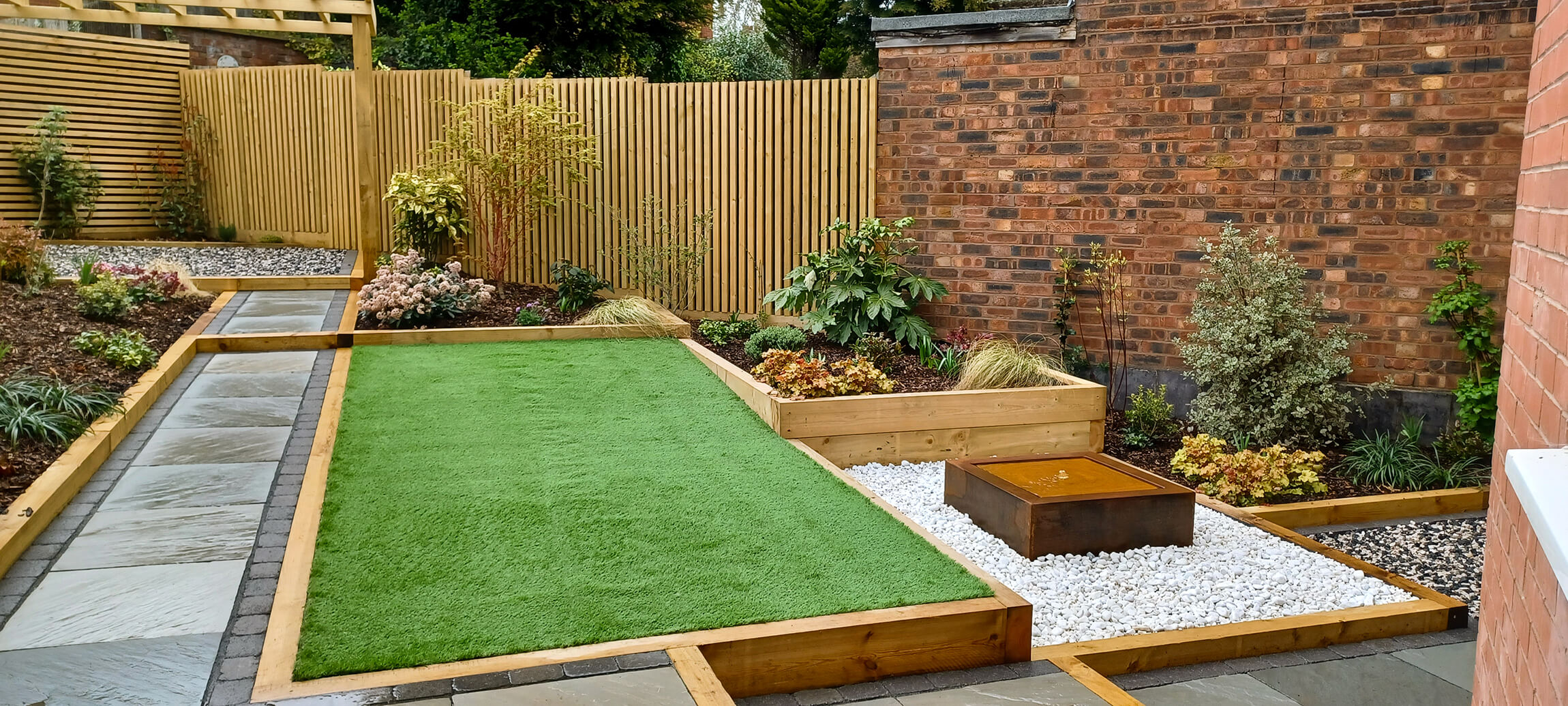
British weather is hard on gardens, and poor garden drainage is one of the most common problems we get called out to fix. When rain has nowhere to go, lawns turn to mud, patios pond, and moisture starts creeping towards the house. The frustrating part is that most of these issues are entirely avoidable when drainage is treated as part of the build rather than an afterthought.
This guide walks through how to recognise a drainage problem, what usually causes it, and the practical solutions that actually keep water moving away from where you don’t want it.
How to Spot a Garden Drainage Problem
The signs are usually easy to read once you know what to look for. Puddles that linger for more than 24 hours after rain are the clearest warning that water has nowhere to escape. Grass that stays soggy and grows a heavy layer of moss is another giveaway, as moss thrives where the ground stays permanently damp.
On hard surfaces, watch for slimy, algae-covered paving and areas where water sits in a film rather than running off. Most concerning of all are damp patches appearing on the house wall near ground level, which suggest water is pooling against the building instead of draining away from it.
What’s Actually Causing the Water to Sit
Behind most drainage complaints is one of a handful of causes. Compacted soil is a big one: heavy clay and ground that’s been driven over or trampled loses its ability to absorb water. On hard landscaping, the usual culprits are sub-base failures and a lack of fall, meaning the patio or path was laid flat instead of with a slight slope to shed water. Add blocked or entirely non-existent surface drains and you have a garden that holds onto every downpour.
The Solutions That Actually Work
The right fix depends on where the water is coming from, but a few reliable approaches cover most situations. Soakaways are the standard answer for downpipes, giving roof water a buried gravel-filled pit to disperse into slowly rather than dumping it onto the surface. On sloping ground, a French drain, which is a gravel-filled trench with a perforated pipe, intercepts water travelling across the site and carries it somewhere safe.
At the base of patios and against the house, an ACO channel drain catches surface run-off along its length and pipes it away before it can pond. Underneath all of this sits the most important and most overlooked element: proper sub-base preparation. A compacted layer of Type 1 MOT stone at 100 to 150mm gives any new hard surface a stable, free-draining foundation, and skipping it is where a lot of drainage problems begin.
Three Rules Worth Following
If you take nothing else from this, keep these three principles in mind whenever you’re planning new hard landscaping.
1. Always design fall away from the house. A minimum gradient of 1:80 across patios and paths ensures water heads away from the building rather than towards it. This should be built in from the start, not corrected later.
2. Never run downpipes straight onto a lawn. Concentrated roof water will churn grass into mud in weeks. Direct it into a soakaway or a proper drainage run instead.
3. Treat drainage as part of the build. The cheapest time to get drainage right is while the ground is open and the sub-base is going in. Retrofitting a solution after the paving is down almost always costs more and delivers a worse result.
If your garden is already showing these symptoms, or you’re planning new paving and want to avoid them entirely, it’s worth having the drainage designed properly from the outset. Our landscaping team handles everything from soakaways and channel drains to full patio and garden rebuilds, and you can see how these details come together in real gardens across our previous projects.
Getting It Right From the Start
Good garden drainage rarely gets noticed, which is exactly the point. When the fall is designed correctly, the sub-base is properly compacted, and roof water is sent somewhere sensible, a garden simply shrugs off the rain and stays usable all year. Get those fundamentals right and you’ll spend far less time mopping up after the next downpour, and far more time actually enjoying the space.