Pet-Friendly Artificial Grass: What Actually Makes One Range Better Than Another
If you share your garden with a dog (or a cat that thinks it owns the place), you’ve probably noticed that not all artificial lawns are created equal. Walk into any showroom and everything gets labelled “pet-friendly”, but that phrase does a lot of heavy lifting and means very little on its own. The truth is that what makes pet-friendly artificial grass genuinely suitable for animals comes down to a handful of specifications most marketing never mentions. Here’s what actually matters, in plain English.
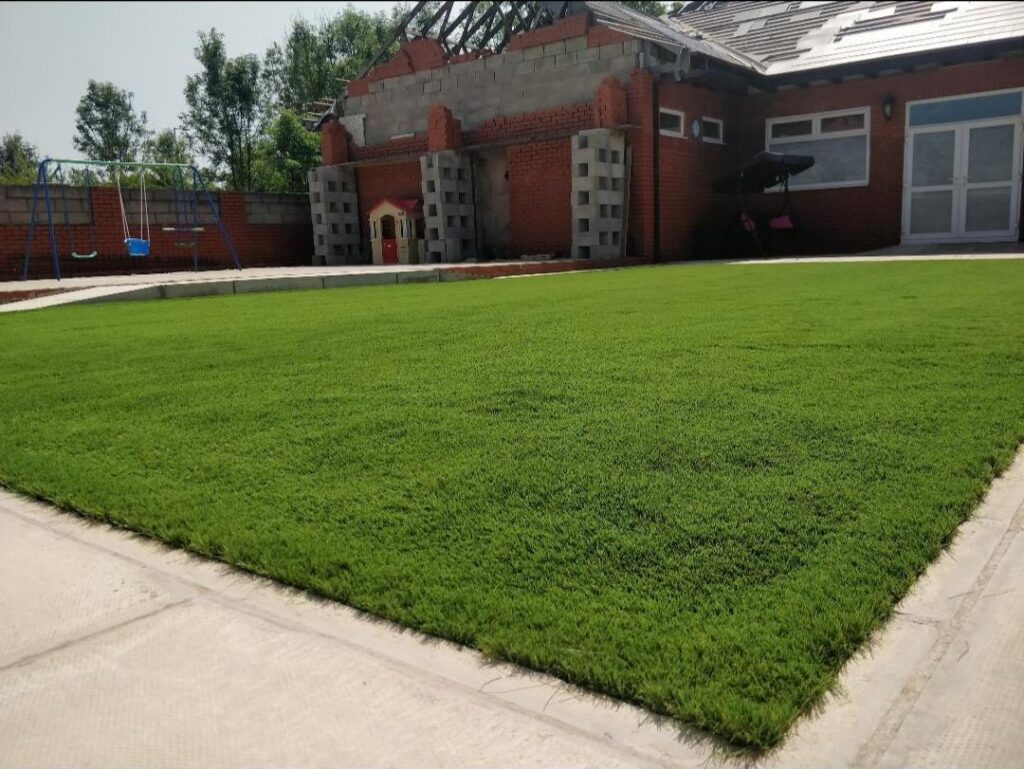
Drainage Rate: The Single Most Important Spec
For pet owners, drainage is everything. Dog urine needs to pass straight through the grass and away into the sub-base, rather than pooling and lingering. The good news is that any artificial grass laid properly on a graded, free-draining sub-base will drain urine effectively — the installation matters as much as the product.
That said, the backing of the grass itself has a drainage rating measured in litres per square metre per minute. As a rough guide, anything around 30 litres/m²/min is good, and 60+ is excellent. Higher rates give you more margin in heavy rain and in multi-dog gardens where there’s simply more liquid to deal with. If a supplier can’t tell you the drainage figure, treat that as a red flag.
Fibre Type and Density: Comfort Underfoot and Under Paw
The shape and density of the grass fibres determine how it feels and how well it copes with claws. Softer C-shape or stem-shape monofilament fibres are kinder on paws and bounce back better than cheap, scratchy flat blades. For durability, look at the stitch density — a figure of 13,650 stitches/m² or higher means the lawn holds up to dogs sprinting, turning and digging without flattening into bald patches.
If you have a large or particularly bouncy breed, density is where it pays not to cut corners. A dense, resilient pile is the difference between a lawn that looks tired in a year and one that still looks smart in a decade.
Infill: The Bit That Handles the Smell
Infill is the granular material brushed into the grass after it’s laid, and it does more than keep the blades standing upright. Kiln-dried sand is the standard, and it helps neutralise the ammonia in dog urine that causes lingering smells. For busy households with several dogs, a zeolite infill upgrade is worth considering — zeolite is a natural mineral that actively absorbs ammonia and releases it when rain or a hose flushes it through, keeping odour under control far better than sand alone.
Antimicrobial Coatings: Useful, Not Magic
Some premium ranges come with an antimicrobial coating on the fibres, designed to inhibit the bacteria that contribute to odours. They genuinely help, but they’re not a substitute for good drainage and proper cleaning — think of them as a useful extra layer rather than the whole solution. If you’ve got multiple dogs or a smaller garden that gets heavy use, the upgrade can be worth it. For a single dog in a reasonably sized garden with good drainage, you may not need it.
Keeping It Fresh: Simple Aftercare
Pet-friendly grass is low-maintenance, not no-maintenance. A little routine keeps it fresh and hygienic:
- Weekly: give high-traffic and toilet areas a quick hose-down to flush anything through the backing.
- Monthly: run a stiff brush against the pile to lift the fibres and keep it looking full.
- As needed: spot-treat any lingering odours with a pet-safe enzyme cleaner rather than harsh chemicals.
One more tip for summer: on a genuinely hot day, artificial grass can warm up in direct sun. A 30-second hose-down drops the surface temperature almost instantly, so your dog can lie on it comfortably. It’s a small habit that makes a big difference in a heatwave.
Which Range Should a Pet Household Pick?
At Wolsten, the two ranges we most often fit for pet owners are our Family range (Cape Verde) and our Luxury range (Amalfi). The Family range is our most-fitted choice for households with dogs — it balances a soft, durable pile, strong drainage and sensible cost, which is exactly the combination most pet owners actually need. The Luxury Amalfi range steps things up on pile quality and realism if you want the very best underfoot feel. Both are perfectly suitable for animals when installed properly.
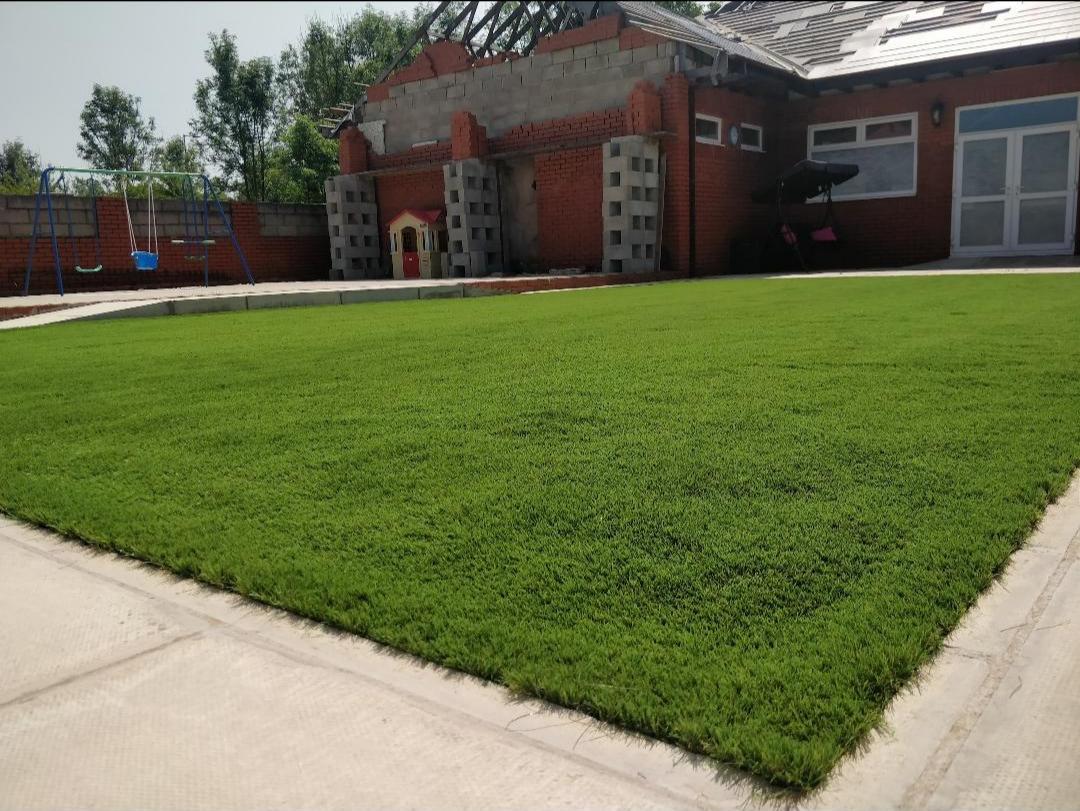
If you’re weighing up your options, it’s worth seeing the difference a proper installation makes for yourself. You can browse our previous projects to see how finished lawns look in real North West gardens, and our artificial grass installation team is happy to arrange a free, no-pressure survey. We’ll give you an honest recommendation tailored to the number, size and breed of your dogs — not just whatever’s on offer that month.
The Bottom Line
“Pet-friendly” isn’t a single feature — it’s the combination of strong drainage, a soft but dense fibre, the right infill and sensible aftercare. Get those right and artificial grass becomes one of the best decisions you can make for a dog-owning household: no more mud, no more bare patches, and a clean, usable garden all year round. If you’re not sure which specification suits your pets, ask for the drainage rate and stitch density first — those two numbers tell you most of what you need to know.