

Decking: A Breakdown of the Factors You Should Understand Before Committing
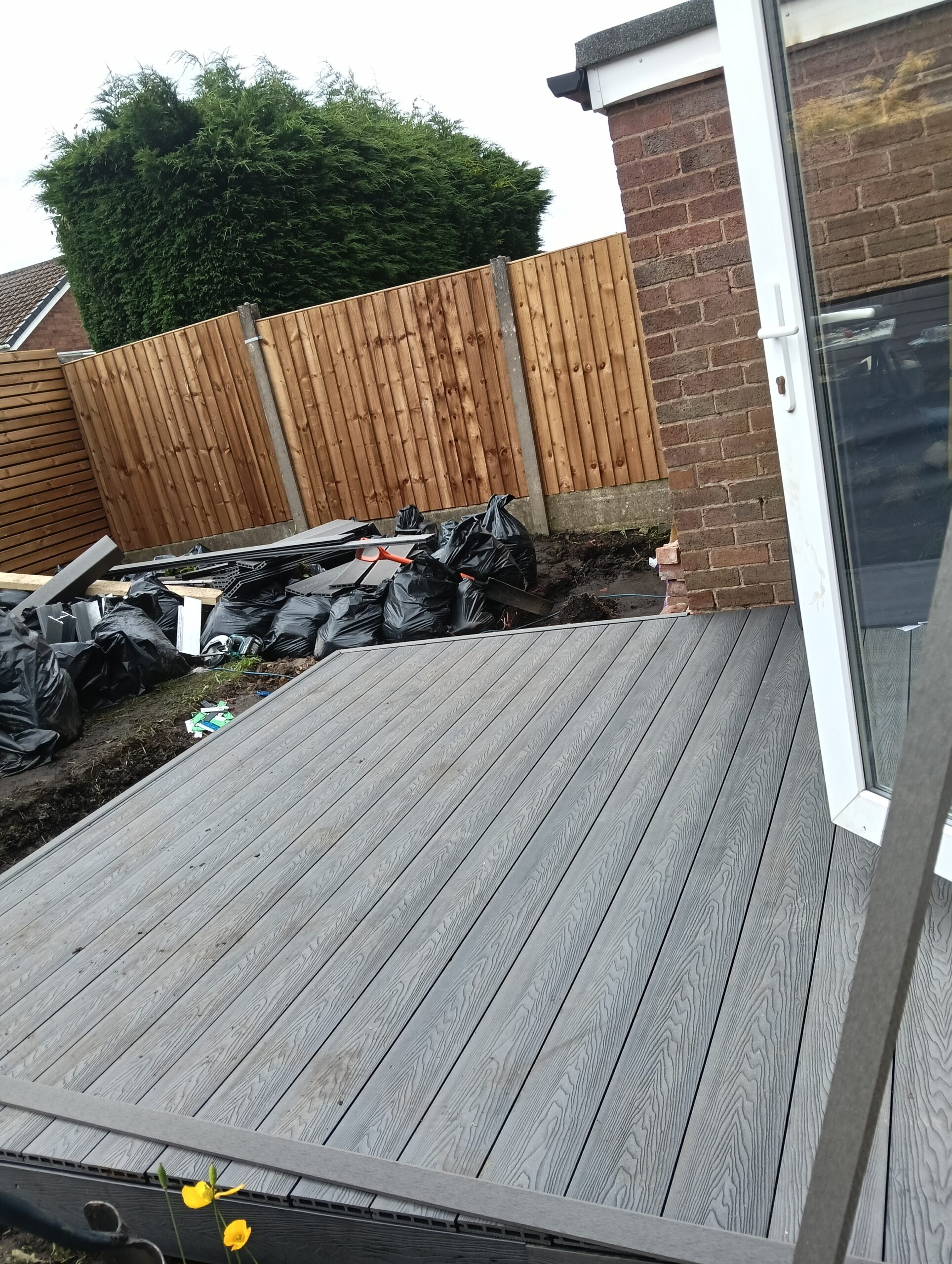
Garden decking is one of those projects that looks simple from the outside and turns out to be anything but. The boards are the part you see, but they are also the part that matters least when it comes to whether your deck still looks good in ten years. If you have not yet chosen a material or committed to a quote, this is the guide to read first. It walks through everything that actually shapes the result, in plain English, so you can spot a good job from a cheap one before you sign anything.
We build decks across the North West, so the figures and advice below reflect what things genuinely cost and where homeowners most often get caught out.
Why Choose Decking Instead of a Patio?
Decking is not automatically better than paving, but there are situations where it wins comfortably. The big one is a sloped or stepped garden. A deck can be built out over a slope on posts, bridging the drop, where a patio would need expensive groundworks, retaining walls and tonnes of imported hardcore to create a level base.
It also shines where you want an outdoor space at the same level as the house — stepping straight out from a kitchen or bi-fold doors onto a raised deck feels seamless in a way a patio several steps down never quite manages. And underfoot, timber and composite feel warmer and softer than stone, which matters if the space is for bare feet and children.
Start With the Site, Not the Boards
Before you think about colour or material, look hard at where the deck is going. Orientation matters more than people expect. A south-facing deck gets the most use and dries quickly, but the sun also fades boards faster and can make timber cup — that is when a board curls up at its edges as it weathers. A north-facing spot stays damp, gets little sun, and is far more prone to going green with algae.
The second thing to assess is drainage and airflow. Standing water under a deck with no ventilation is the single fastest way to rot one. Air needs to move freely beneath the boards so they can dry out. Finally, work out your ground levels and whether you want a ground-level deck or a raised one — a raised deck stepped up off the ground needs supporting posts and, by law, a balustrade (the safety railing) once it is above a certain height.
The Sub-Frame Is Everything
Here is the part most homeowners never see and most cheap quotes skimp on: the sub-frame. This is the hidden skeleton the boards sit on, and it decides how long your deck lasts. A great board on a bad frame is a five-year deck.
The sub-frame is made of joists — the parallel beams the boards screw down to — set at the right joist centres, which is the gap measured centre-to-centre between them. Tighter centres mean a stronger, less bouncy deck: around 400mm for timber, often 300mm or less for composite, which needs more support. Between the joists go noggins, short cross-braces that stop the joists twisting over time.
The whole frame must be held off the ground properly — on adjustable pedestals or concrete pads, never joists laid straight onto soil — with a weed membrane underneath and ventilation gaps left for airflow. The joists themselves should be properly treated timber. None of this is free: once you include noggins, a deck needs roughly seven linear metres of joist per square metre of surface. A suspiciously cheap quote almost always means the frame is where corners have been cut.
Decking Materials and Realistic 2026 Costs
There are three main routes, plus a couple of niche premium options. All the figures below are 2026 North West fully-installed “from” prices that include a proper sub-frame and groundworks — which is exactly why they look higher than the board-plus-labour averages you see quoted elsewhere. The fastest way to get an accurate number for your own garden is our Decking Price Calculator, which is the source of truth for these prices and lets you price your exact size in seconds before booking a survey.
One important thing to understand: the per-square-metre rate falls as the deck gets bigger, because fixed setup costs like groundworks, the sub-frame and delivery spread over a larger area. So always think in size-anchored terms rather than a single rate.
Pressure-treated softwood — sometimes called “tanalised”, meaning the timber has been pressure-treated with preservative to resist rot. It is the budget choice but needs annual care. A small 9m² (3x3m) deck comes in around £1,850 (roughly £200/m²), a typical 20m² (5x4m) deck around £2,800 (roughly £140/m²), and a large 42m² deck around £4,300 (roughly £100/m²).
Composite — a board made from wood fibre mixed with recycled plastic. It costs more upfront but needs very little maintenance. A 9m² deck is around £2,350 (roughly £260/m²), a 20m² deck around £3,400 (roughly £170/m²), and a 42m² deck around £5,200 (roughly £125/m²).
Install-only — if you supply your own boards and just want them built properly, the calculator’s install-only figure is roughly £1,700 for 9m² and £2,550 for 20m², which is worth knowing if you are working to a tight budget.
Hardwood — premium natural timbers like balau or oak sit above standard softwood and are quoted individually rather than through the calculator, partly because sustainable-sourcing rules and import tariffs have pushed hardwood prices up recently. At the very top end there are also niche PVC and aluminium systems, but they are a specialist choice.
Two final cost notes. London and the South East, plus premium composite brands such as Trex or Millboard, run higher than the figures above. And whatever you choose, order around 10–15% extra boards from the same batch — colour can vary batch to batch, and you will want matching spares for offcuts, mistakes and future repairs. A proper composite-versus-timber head-to-head is coming to the blog in early July if you want to weigh them up in detail.
Planning Rules and Building Regs
Most garden decking falls under permitted development, meaning you will not need planning permission — but only if it is no more than 30cm above ground level and, together with other extensions, covers no more than 50% of your garden. Raised decks are where it gets stricter: they can need planning permission because of overlooking and privacy concerns, and they legally require a balustrade above a safe height, fixed to upright newel posts at the corners. Building Regulations rarely apply to a simple garden deck, but that does not mean the structure can be an afterthought — a raised deck still has to be genuinely safe to stand a group of people on.
Maintenance: What Each Material Actually Needs
This is where honesty matters. Softwood timber needs an annual clean followed by re-oiling or staining — realistically a weekend of work plus the cost of materials, or paying someone to do it. Composite is far lower effort: an occasional wash and a brush is usually all it asks. Whichever you choose, keep an eye on slip risk: shaded timber in a UK winter can get treacherous, so grooved boards or anti-slip inserts are well worth considering for north-facing or shaded decks.
How Long Decking Lasts — and What Failure Looks Like
Well-maintained softwood lasts around 10–15 years, hardwood around 15–25, and quality composite 20–25 years or more, often with fade and stain warranties. Knowing what failure looks like helps you spot a cheap job before you buy: rot appearing at the posts and joist ends, joists sagging or the deck bouncing underfoot, and boards cupping or splitting. Almost all of these trace back to the frame and the groundwork, not the boards themselves — which is the whole point of spending your money where it counts.
Questions to Ask Any Installer
Get the sub-frame specification in writing, including the joist centres they will use. Ask how the boards are fixed: hidden clips grip the board edges for a clean, screw-free surface, while face-fixing screws straight through the top — cheaper, but the screw heads are visible. Ask whether the price includes a fascia or picture-frame board, the trim that hides the raw edge of the sub-frame for a finished look. And crucially, ask for the warranty on the frame and the boards separately — a 25-year board warranty means nothing if the frame underneath fails in year six.
A Worked Example: A 20m² Garden Deck
To make it concrete (illustrative, not a quote): a typical 20m² (5m x 4m) ground-level garden deck in the North West comes out at roughly £2,800 fully fitted in pressure-treated softwood and around £3,400 fully fitted in mid-range composite — or about £2,550 install-only if you supply the boards yourself. Remember the size effect: a smaller 9m² deck costs less in total but more per square metre (softwood around £1,850, composite around £2,350), while a large 42m² deck drops to a lower per-m² rate. Watch the add-ons that catch people out, too — steps, a balustrade on a raised deck, a picture-frame fascia, integrated deck lighting or a pergola each add materials and labour on top. The calculator lets you price your own size and these extras instantly.
Three Tips Before You Commit
First, spend the budget on the frame before the boards — it determines lifespan whichever surface you choose. Second, order around 10% extra boards from the same batch so your spares match. Third, ask to see a deck the installer built three or more years ago, not last month’s photos. Decking only reveals its real quality after a few winters, and any installer proud of their work will happily show you an older example.
If you would rather not work all of this out alone, that is exactly what we are here for. You can see the kind of finishes we deliver on our previous projects page, and decking sits within our wider landscaping work, so a deck can be designed alongside paving, planting and lighting as one coherent garden. When you are ready, our decking service includes a free survey with a fixed written quote — no guesswork and no surprises.
The Bottom Line
Good garden decking is mostly about the things you cannot see: the right material for how much maintenance you will realistically do, a properly built and ventilated sub-frame, and an installer who will put their specification in writing. Get those right and the boards will look after themselves for years. Every figure here is a 2026 North West installed range, so treat them as a starting point — the only truly accurate number is a surveyed quote on your specific garden.