

Case study: Garden flagging makeover in Preston.
An overgrown, unloved Preston garden -- transformed in 2 days. Old turf and weeds dug out, 2 tons of MOT subbase compacted, over 80 grey flags laid butt-jointed, and a white decorative stone border to finish. £1,700 fixed.
Project at a glance Verified Wolsten build
- Property type
- Family garden -- Preston
- Service
- Landscaping & Paving
- Time on site
- 2 days (over 80 flags)
- Fixed price
- £1,700 all-in
- Subbase
- 2 tons of MOT, whacker-compacted
- Flagging
- Grey flags, butt-jointed
- Finish
- 100kg white decorative stone border
- Built by
- Three founders on site
Why they called us.
The garden was overgrown and unloved. Tired turf, scattered weeds, the kind of space a homeowner walks past without using. The brief from Defrim was clear-eyed and pragmatic: forget exotic stone or tiered patios -- get the garden flat, hard-wearing and low-maintenance at a sensible budget so the family could actually use it again.
We surveyed, quoted £1,700 fixed, and started the following week.
What we did.
Two days on site. Three of us full-time. Over 80 flags laid, every joint butted tight.
The build sequence:
- Day 1 -- dig out + subbase. Stripped the old turf and weeds back to a flat sub-grade. Removed the lot.
- Laid 2 tons of MOT type-1 for a stable sub-base, levelled and compacted with a whacker plate.
- Set out the perimeter and checked falls -- everything pitched slightly off the property edge so surface water drains away from the house.
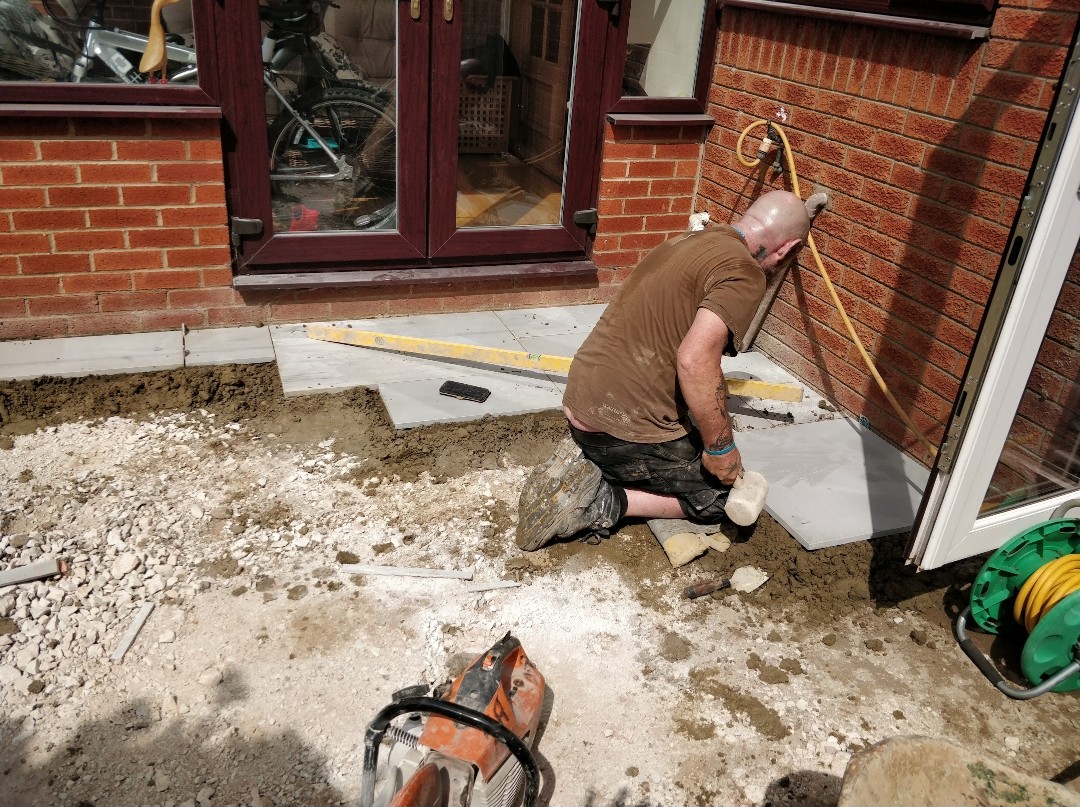
- Day 2 -- flagging + finish. Laid the grey flags butt-jointed, working out from the closest reference line so the joints stayed straight across the full coverage.
- Cut around the edges and obstructions cleanly.
- Finished by spreading 100kg of white decorative stone around the perimeter -- a clean visual frame that doubles as drainage and keeps the flagging looking sharp.
- Full clean-down, walkaround, photos, handover.
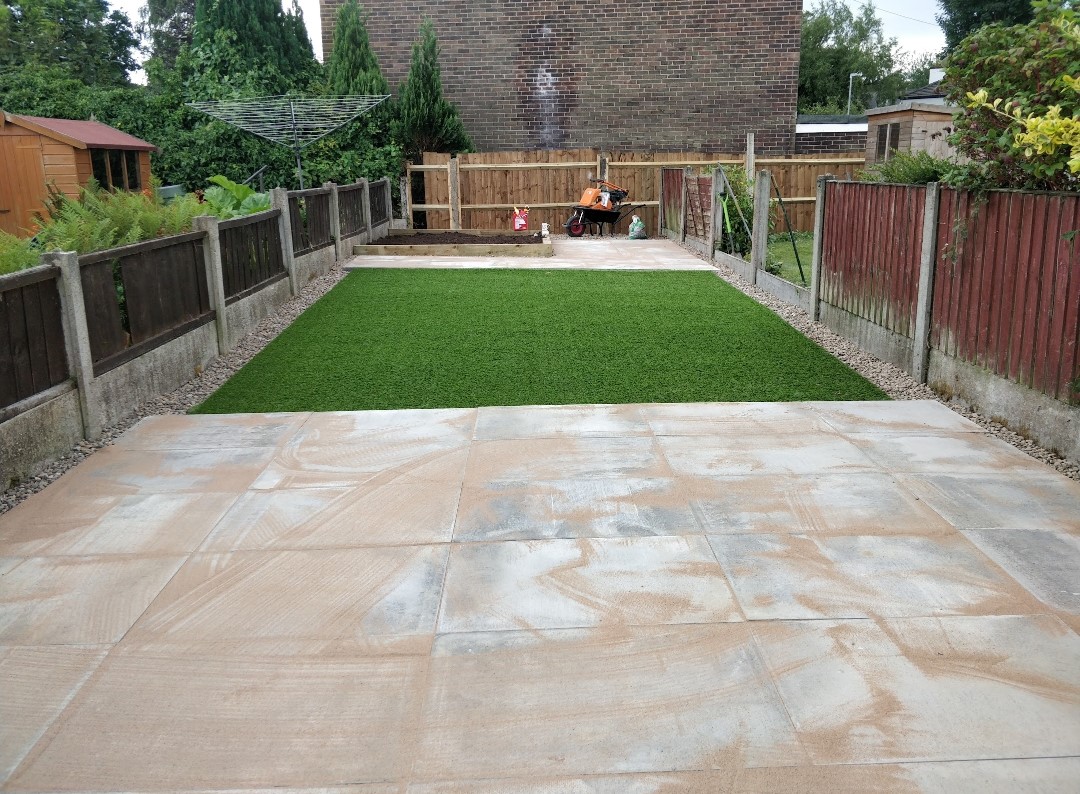
End result: a low-maintenance, hard-wearing garden the family can use straight away. Two days, start to finish.
The whole project, in four shots.
Real photos from the actual Preston job.
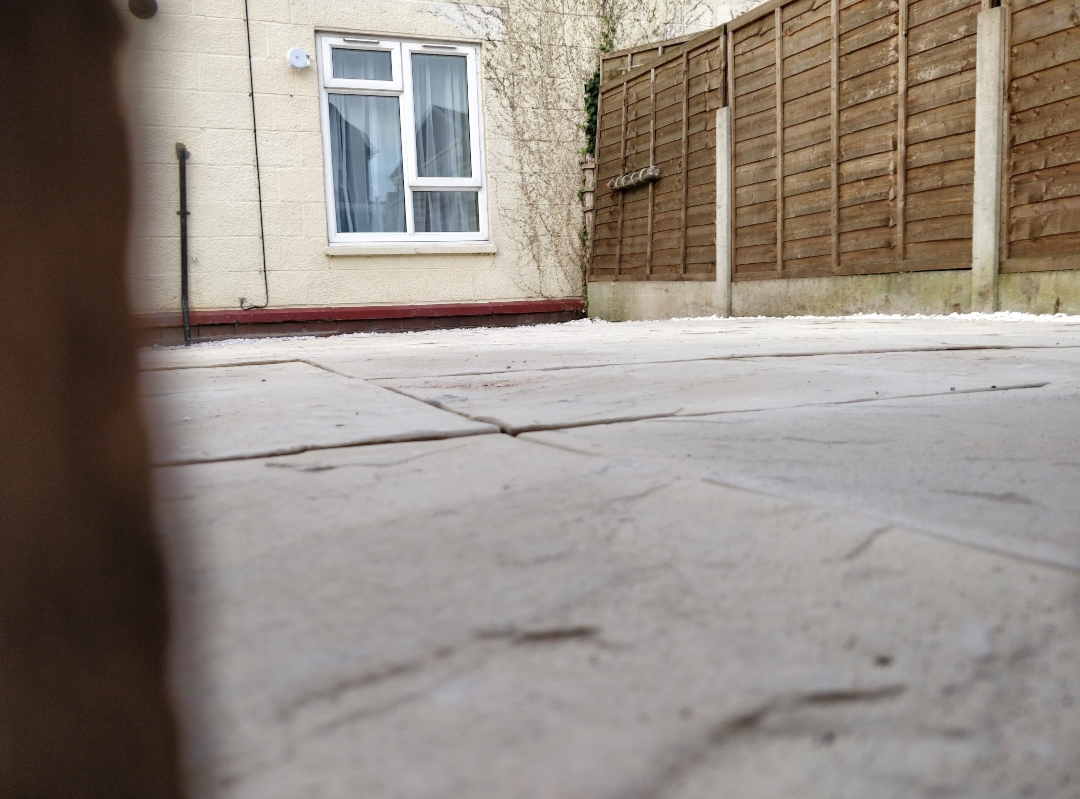
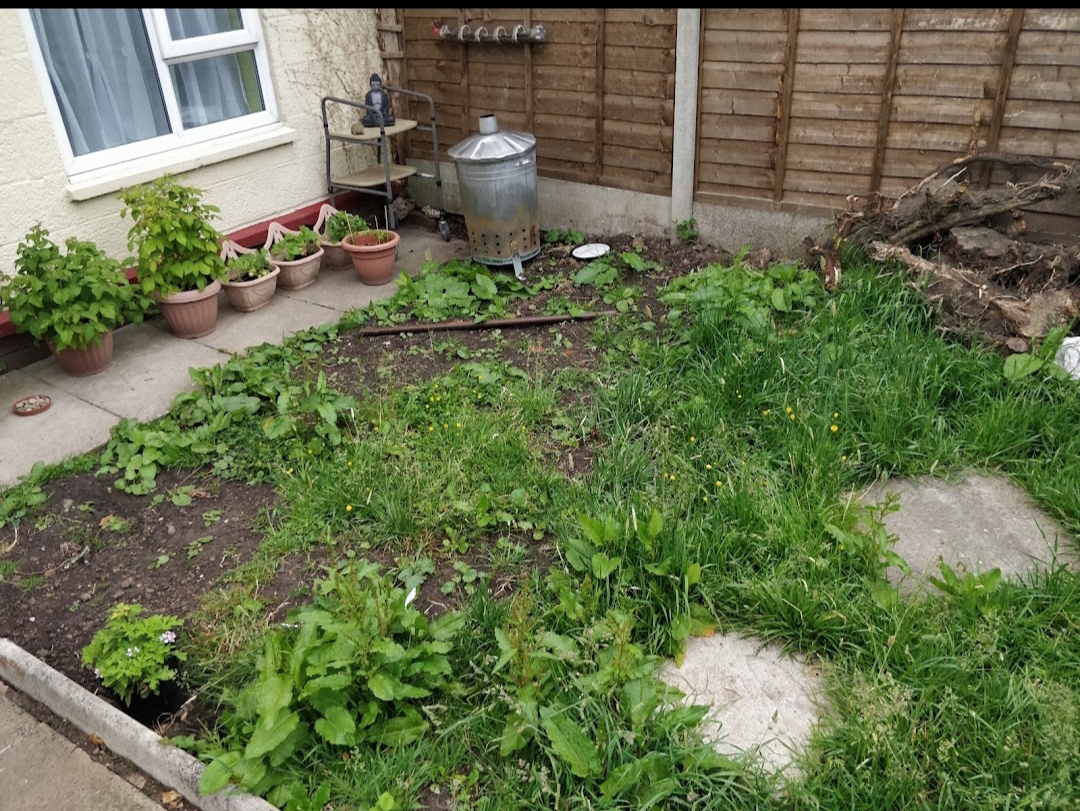 Overgrown, unloved. Tired turf, scattered weeds, no usable space.
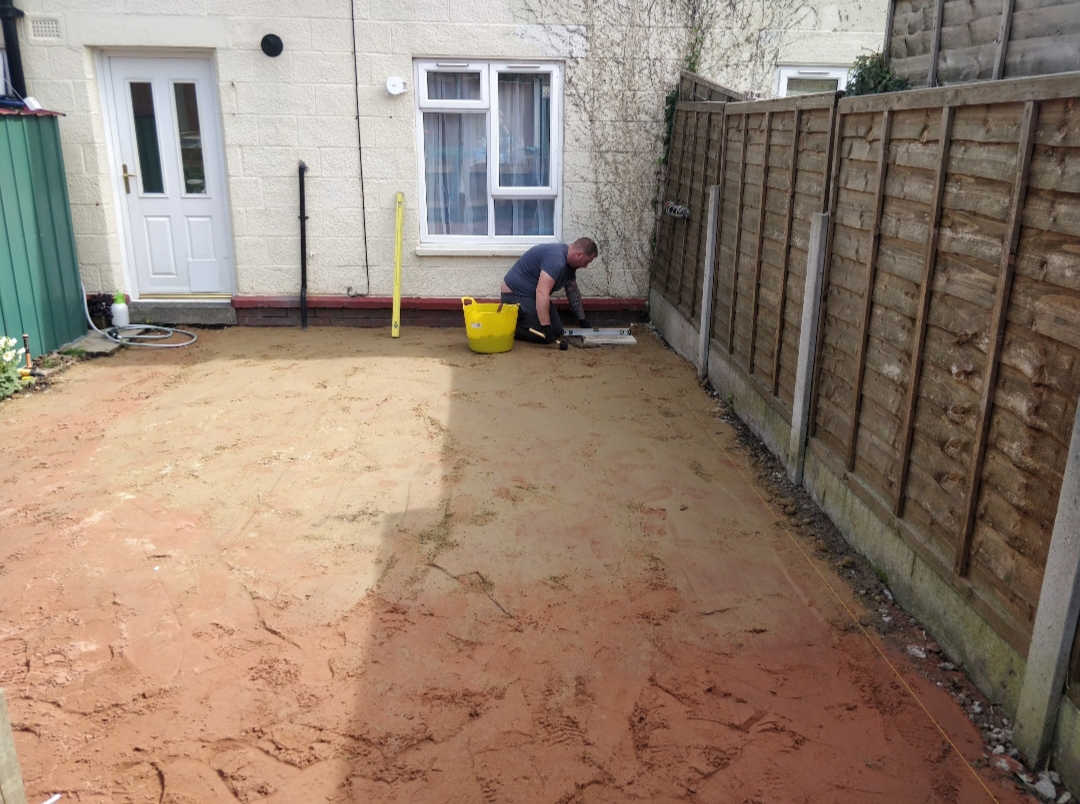 Day 1: stripped back to a flat sub-grade. MOT going down next.
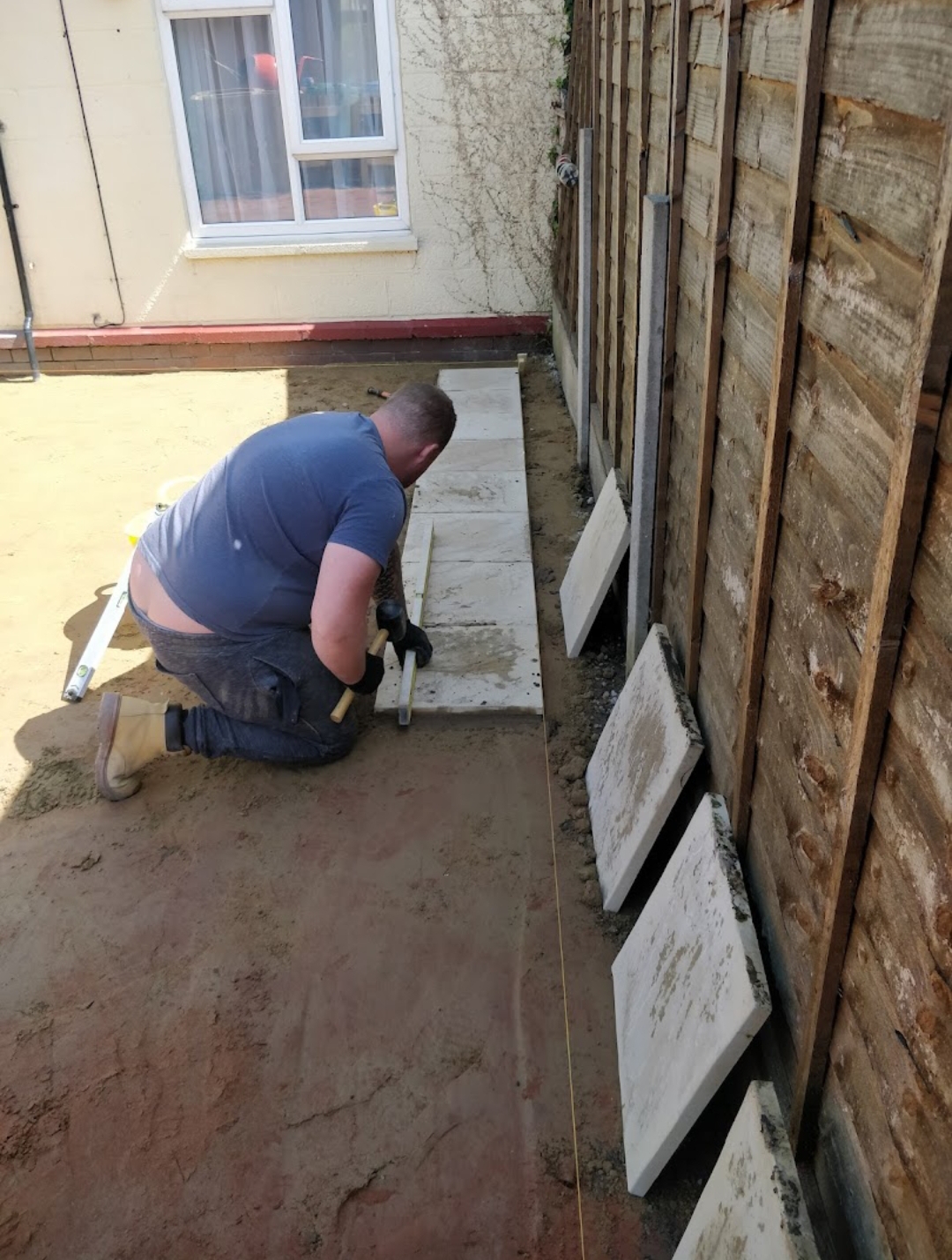 Day 2: flags going down butt-jointed. Over 80 in total.
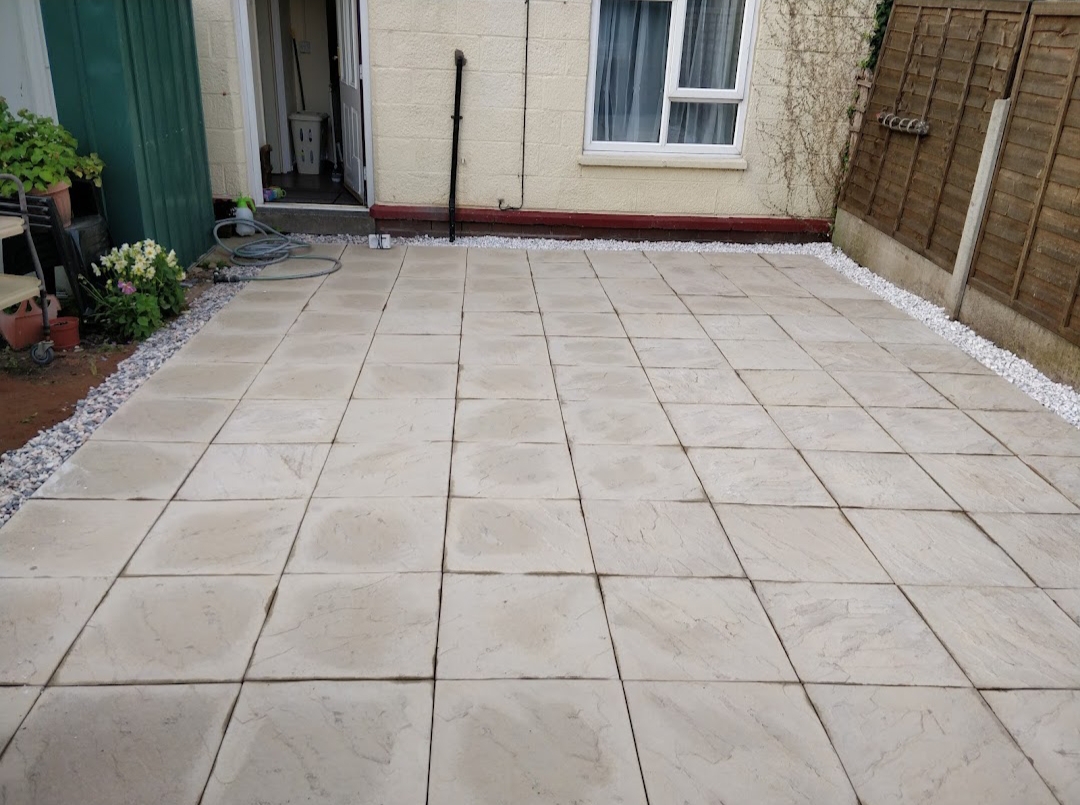 Finished: 80+ flags, white decorative stone perimeter. Family using it the next day.
What Defrim said.
2 days for the full dig out, prep and flagging, it was over 80 flags. Such incredible work. I have recommended to friends and family.
Every detail of the Preston build.
The full set of photos taken throughout the project.
For the discerning homeowner.
What we actually built into this paved area.
MOT type-1 subbase -- why 2 tons and why a whacker plate
The single biggest failure point on flagging is the subbase. We use MOT type-1 -- the standard graded crushed stone -- laid in a single 50-80mm bed. Whacker-plate compaction in passes is non-negotiable: without it, the base settles unevenly under the flags and you get rocking slabs within a year. For this Preston garden 2 tons of MOT was the right tonnage for the coverage.
Butt-jointed flag pattern -- why not mortared joints
For a budget-conscious garden flagging job, butt-jointing (flags placed tight to one another with no mortar between) is the right call: faster on site, no jointing-compound cost, cleaner visual finish. Mortared joints are essential for high-end Indian stone patios but overkill for this kind of cost-effective flagging.
Falls + drainage -- the 1:80 rule
Every flagged area we lay gets a deliberate fall of around 1:80 away from the property -- enough that surface water sheets off the flags toward the garden edge or a drainage strip, not into the house wall. Invisible to the eye, critical for long-term performance.
White decorative stone border -- why it earns its place
The 100kg of white decorative stone around the perimeter isn't just decoration: it gives the flag edges a clean visual frame, fills the awkward strip between flag-edge and fence/wall, suppresses weed growth at the edges, and adds free drainage at the periphery. For £40-ish of stone it's the highest-impact finish choice on a budget flagging job.
Three founders. No subcontractors.
Liam, Ryan and Paul on every job.

Liam
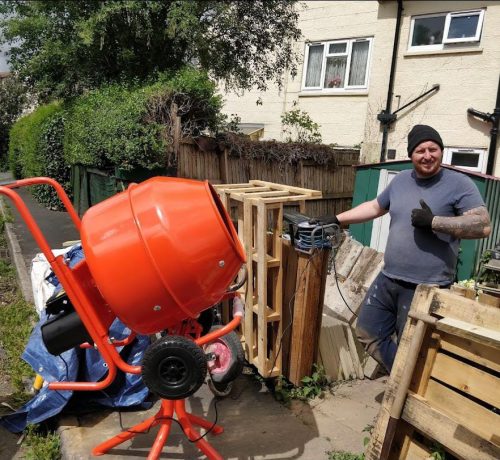
Surveyed, quoted, and led the build. On the tools both days alongside the lads.
Ryan
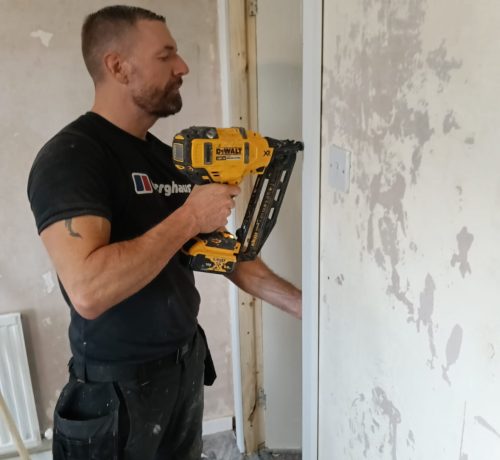
Time-served bricklayer. Set out the line, laid the flags and called the falls.
Paul
Cut around obstructions, spread the decorative stone border, walked the final clean-down with Defrim.
Preston -- Lancashire
Preston is a substantial Lancashire city with a strong mix of family housing stock -- terraced, semi-detached and end-terrace properties with rear gardens that often outlive their original landscaping. Budget-friendly flagging is one of the most common transformations for this kind of garden.
We're based in Westhoughton, about 30 minutes from Preston.
Questions homeowners ask about projects like this.
Can I get garden flagging for around £1,700?
This Preston job came in at £1,700 fixed -- includes the dig-out, 2 tons of MOT subbase, over 80 grey flags, 100kg of white decorative stone, and the labour for 2 days on site. Comparable budget flagging jobs in the North West typically sit in the £1,200-£3,500 range depending on coverage, ground conditions and finish choices.
How long does a flagging job like this take?
This Preston project took 2 days -- one day for dig-out + MOT subbase, one day for flag-laying + decorative stone finish. Larger gardens with more complex shapes typically run 3-5 days; multi-zone landscape transformations (like our Tottington case study) run a week or more.
Why MOT type-1 and not a concrete pad?
A concrete pad costs significantly more and isn't necessary for a flagged garden patio. MOT type-1, properly compacted, gives you a stable, well-drained subbase that will outlast the flags themselves on this scale of job.
Will the flags shift or sink over time?
Not if the subbase is laid right. The two failure points are (1) inadequate MOT depth or grade and (2) poor compaction. Both eliminate with proper material and a whacker plate -- which we always use.
Do I need planning permission for garden flagging?
Almost never for a rear garden. Planning permission can apply to front-garden paving over a certain area if it's non-permeable, but for a rear-garden butt-jointed flagging job in Preston this falls squarely under permitted development. We'll flag any planning consideration at the free survey.

Get a fixed Preston-style flagging quote in 1 working day.
Free on-site survey at your property. Itemised written quote back within 1 working day. No deposit, no pressure -- exactly the way this project worked for Defrim.
Get a free quote
Reply within 1 working day. We'll never share your details.